
What Is Deodorant Wipe Packaging?
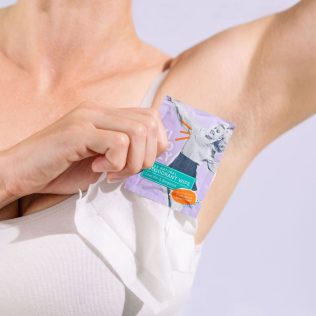
image from Pinterest
Deodorant wipe packaging refers to flexible packaging formats designed to store, protect, and dispense pre-moistened wipes used for personal hygiene. The most common formats include single-use sachets and resealable pouches, both engineered to maintain moisture, hygiene, and product stability over time.
Why Deodorant Wipes Are Gaining Momentum
Deodorant wipes aren’t trending because they’re new—they’re growing because they solve problems traditional formats can’t.
Think about it:
- You can’t spray deodorant on a plane.
- A roll-on isn’t convenient after a workout.
- A stick isn’t discreet in public.
Wipes solve all of that—fast, portable, and ready in a single step. That’s why more personal care brands are expanding into deodorant wipe packaging. Not to replace their core range, but to capture overlooked usage moments.
For brands, this creates new on-the-go consumption moments—but it also introduces a critical dependency on packaging performance.
Why Deodorant Wipe Packaging Is Critical to Product Performance
Unlike traditional deodorants, wipes are highly sensitive to packaging failure. If packaging underperforms, the product fails.
Poor packaging leads to:
- Moisture loss → dry wipes
- Seal failure → leakage
- Contamination → hygiene issues
From a technical standpoint, packaging must control:
- Moisture retention
- Air exposure
- Seal integrity over time
If packaging can’t maintain these, the product won’t survive distribution, let alone shelf life.
Deodorant Wipe Packaging Formats: Sachets vs Resealable Pouches
1. Sachets — Simple, Low-Risk Launch Option
Sachets are sealed, one-time-use formats.
Best for: sampling campaigns, travel packs, product testing
Packaging advantages:
- No reseal failure risk
- Stable and predictable shelf life
- Simple production setup
Decision insight: If you’re launching a new formula, sachets reduce risk because you don’t need to solve reseal performance.
2. Resealable Pouches — Retail and Repeat Use
Resealable pouches work well for daily use and higher wipe counts, yet they’re also the format most prone to performance issues if not designed carefully.
Key decision: reseal system
- Adhesive label: lower cost, easier production, weaker long-term seal
- Hard cap: stronger moisture control, better user experience, higher perceived value
Rule of thumb:
- Short usage cycle (≤2 weeks) → label may suffice
- Longer usage → invest in a hard cap
Custom Pouch Features That Improve Packaging Performance
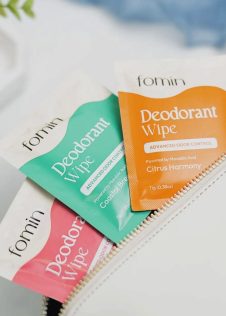
image from Pinterest
Small design details in wipe packaging have a big impact on usability, protection, and retail performance.
Tear Notch — Controlled opening without scissors
- Prevents uneven tearing that damages seals
- Improves first-use experience
- Essential for sachets and pouches without caps
Euro Slot (Hang Hole) — Retail visibility
- Allows hanging on display hooks
- Increases shelf presence
- Useful for pharmacies, gyms, or convenience retail
Hard Cap vs Label Seal — Performance matters
- High wipe count or long usage → hard cap is safer
- Short cycle → label may work
Fill Volume & Wipe Count: Packaging Implications
The number of wipes and liquid dosage directly affect performance.
- Higher liquid → more internal pressure
- More wipes → greater air displacement during use
- Larger packs → higher drying risk after opening
Practical guidance:
- 5–10 wipes → easier to maintain freshness
- 20+ wipes → requires stronger reseal and barrier
Scaling without adjusting packaging increases failure risk.
Seal Integrity: Where Most Issues Begin
Even high-quality materials fail if the seal is weak.
Risks:
- Weak side seals → leakage in transit
- Inconsistent heat seals → micro air leaks
- Contamination during filling → hygiene issues
What to check with suppliers: seal strength, burst resistance, and compatibility with your formula.
Formula Compatibility
Not all liquids behave the same. Alcohol, essential oils, or actives can:
- Weaken seals
- Interact with film layers
- Reduce long-term stability
Always run compatibility testing and validate real-world shelf life.
Logistics & E-Commerce Considerations
Flexible packaging is cost-efficient if designed properly.
Advantages:
- Lower material weight vs rigid containers
- Higher carton efficiency
- Reduced shipping costs
Challenges:
- Pouch durability in transit
- Risk of compression damage
- Temperature sensitivity
For e-commerce, durability outweighs minimal cost savings.
Branding: Packaging Drives Purchase
Flexible wipe packaging gives a full surface to communicate value.
Focus on:
- Clear, concise messaging: “Instant refresh” / “On-the-go hygiene”
- Functional clarity: wipe count, resealable features
- Strong visual identity
Good design reduces hesitation and speeds up purchase decisions.
Sachets + Secondary Packaging: A Complete Brand Experience
Sachets alone can feel small and single-use. Pair them with secondary packaging, and they become part of a thoughtful, integrated packaging system.
- The sachet provides hygiene, convenience, and a precise first impression.
- Secondary packaging (resealable pouch or retail-ready carton) adds protection, structure, and space to communicate your brand story.
From a packaging and branding standpoint, this combination keeps wipes fresh during transport and on shelf, while giving more room for branding, product benefits, and usage guidance. Treated as a connected system, it ensures your deodorant wipes perform consistently, feel thoughtful to consumers, and look cohesive.
Sachets + Stand-Up Pouch
- Better portability and storage
- Added protection in transit
- Retail-ready bundle
Sachets + Product Box
- Stronger shelf presence
- More space for branding and claims
- Flexible SKU options (e.g., 10-pack, 20-pack)
How to Make the Right Packaging Decision
Before finalising:
- What is your target shelf life?
- Where will the product be used?
- How many wipes per pack?
- Price positioning?
- Priority: cost, performance, or sustainability?
If these aren’t defined, the packaging decision is guesswork.
The Bottom Line
image from Pinterest
Deodorant wipes are simple to launch but hard to execute well. Packaging controls performance, and small design choices can make or break your product. Brands that succeed treat packaging as a core development decision, not a final step.
FAQs About Deodorant Wipe Packaging
- What is the best packaging for deodorant wipes?
The best deodorant wipe packaging depends on usage. Single-use sachets are ideal for sampling and travel, while resealable pouches with hard caps are better for daily use, offering stronger moisture retention and a better user experience.
- Why do deodorant wipes dry out in packaging?
Wipes dry out due to poor seal integrity, low-barrier materials, or repeated air exposure after opening. Resealable systems and high-barrier films are critical to maintaining moisture over time.
- What is the difference between label seal and hard cap packaging?
Label seals rely on adhesive and can weaken over repeated use, making them suitable for short-term use. Hard caps provide a mechanical seal, offering better durability, moisture control, and premium positioning.
- How do you test deodorant wipe packaging performance?
Packaging is typically tested through:
- Seal strength and burst testing
- Leak testing under pressure
- Stability testing over shelf life
- Compatibility testing with the formula
These ensure the packaging maintains performance during transport and use.
- How does formulation affect packaging choice?
Formulations with alcohol, essential oils, or active ingredients can interact with packaging films and seals. This can lead to degradation, leakage, or reduced shelf life, making compatibility testing essential.
- Do deodorant wipes require secondary packaging?
Not always, but secondary packaging improves protection, branding, and retail presentation. It is especially useful for sachets, which benefit from added structure and communication space.
Start Your Deodorant Wipe Packaging Project
At Primepac, we help brands design custom deodorant wipe packaging that balances:
- Barrier performance
- Seal reliability
- Cost vs functionality
- Scalable production
Request samples or speak with our team to find the right sachet or pouch solution for your deodorant brand.