
Most brands think “recycled packaging” means compliant packaging.
It doesn’t.
In Australia, recycled content isn’t controlled by a single law, yet it’s still one of the most misunderstood and misrepresented areas in sustainable packaging. And this is where many suppliers oversimplify things, leaving brands exposed to risk later.
If you’re planning packaging in 2026, the real challenge isn’t just choosing recycled materials.
It’s understanding how recycled content fits into the bigger system — including recyclability, reporting, and real-world supply constraints.
What Are the Recycled Content Requirements in Australia?
Australia does not mandate minimum recycled content by law. Instead, brands are encouraged to align with APCO’s National Packaging Targets, including:
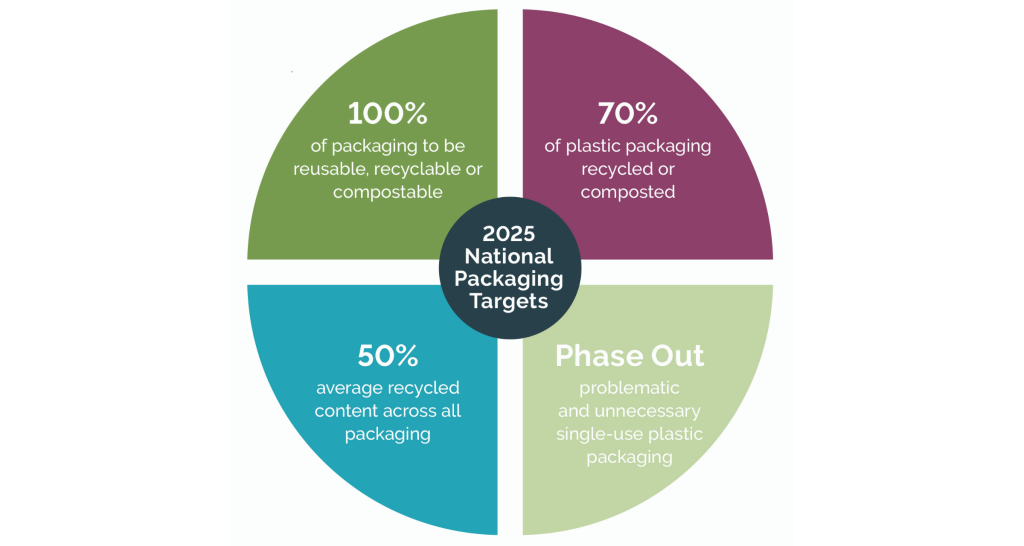
- 50% average recycled content across all packaging
- 100% reusable, recyclable or compostable packaging
- 70% of plastic packaging recycled or composted
These targets are industry-led and supported by the Australian Government, with compliance measured through annual reporting rather than strict legal enforcement.
Is Recycled Content Mandatory in Australia?
No, recycled content is not legally mandatory for most packaging in Australia. However, it is increasingly required through:
- APCO annual reporting obligations apply to APCO members and any brands contributing to Australia’s sustainability efforts
- Government procurement policies
- Retailer and brand sustainability commitments
This makes recycled content a commercial expectation, even if not a strict legal requirement.
What “Recycled Content Requirements” Actually Mean in Australia
Let’s clear up the confusion.
Australia does not have a universal legal requirement mandating recycled content across all packaging. Instead, expectations are driven by the National Packaging Targets led by Australian Packaging Covenant Organisation.
The key target:
- 50% average recycled content across all packaging by 2025
This sits alongside other targets:
- 100% reusable, recyclable or compostable packaging
- 70% of plastic packaging recycled or composted
These targets are supported by the Australian Government, but remain industry-led rather than strictly enforced by law.
What most misconceptions are:
- The 50% is an average across your total packaging portfolio
- It’s based on weight, not unit count
- It requires annual reporting and evidence
So it’s not about one “perfect” package, it’s about system-wide alignment.
The Bigger Picture: Recycled Content Is Only One Piece
Here’s where many brands get tripped up.
Recycled content is just one part of sustainable packaging. It needs to work alongside:
1. Recyclability (Can it actually be recycled?)
Assessed through tools like PREP, which supports the Australasian Recycling Label.
2. Material efficiency (Are you using more material than needed?)
Lightweighting and right-sizing reduce both cost and environmental impact.
3. End-of-life outcomes (What actually happens after use?)
Compostable, recyclable, landfill, each has different infrastructure realities in Australia.
A pack with high recycled content but poor recyclability can still fail sustainability goals.
The Reality in 2026: Targets vs Supply Constraints
According to Australian Packaging Covenant Organisation reporting:
- Australia is still below the 50% recycled content target
- PCR supply (especially food-grade plastics) remains limited
- Costs and availability are inconsistent
This creates a gap between:
- What brands want
- What suppliers promise
- What’s actually achievable
Which is why early planning matters more than ever.
What Suppliers Don’t Tell You About Recycled Content
1. “Recycled” can mean different things
- PCR (Post-Consumer Recycled) → from household waste
- PIR (Post-Industrial Recycled) → from manufacturing waste
Both count, but:
- PCR supports circularity
- PIR is easier to source and more stable
2. There are no fixed minimums per material
Despite common claims:
- There’s no universal rule like “30% rPET required”
- Targets are averages, not mandatory thresholds
3. Material structure affects real outcomes
Even with recycled content:
- Laminates (e.g. plastic + foil) reduce recyclability
- Coatings and adhesives can interfere with processing
- Complex formats often fall outside recycling streams
Sustainable packaging is about structure first, material second.
4. Recycled content ≠ ARL compliance
The Australasian Recycling Label:
- Evaluates recyclability
- Not recycled content
You need to design for both:
- What it’s made from
- What happens after use
5. Imported packaging can create hidden risks
Global claims don’t always translate locally.
Australia has:
- Different recycling infrastructure
- Different acceptance criteria
- Different reporting expectations
Always validate against local systems, not overseas standards.
Where Recycled Content Becomes “Real”
While most targets are voluntary, there are increasing pressure points:
Government procurement
The Australian Government applies minimum recycled content requirements in certain procurement categories.
Retail expectations
Major retailers are aligning with APCO targets and pushing requirements down the supply chain.
Brand accountability
Sustainability claims now require:
- Evidence
- Traceability
- Consistency across production
This is where many packaging projects fall apart, not in design, but in execution.
How to Approach Sustainable Packaging (Without Overcomplicating It)

Instead of chasing a single metric, focus on building a balanced packaging system.
Start with the right format
- Mono-material where possible
- Avoid unnecessary complexity
Align materials early
- Lock recycled content targets during design
- Check feasibility with suppliers upfront
Validate before production
- Use PREP for recyclability
- Confirm documentation for reporting
Plan for consistency
- Ensure supply chain alignment
- Avoid batch variation in recycled content
This reduces redesigns, delays, and unexpected compliance issues.
Why Many Brands Struggle (And Where Support Helps)
The biggest issue isn’t lack of intent — it’s fragmentation.
Packaging decisions are often split across:
- Designers
- Suppliers
- Procurement teams
Without alignment, you get:
- Conflicting material choices
- Inconsistent recycled content
- Missed reporting requirements
This is where a one-stop packaging approach becomes especially valuable, supporting clearer decision-making from the very beginning as well as streamlined sourcing.
Making Sustainable Packaging Practical (Not Just Theoretical)
For brands navigating recycled content in 2026, the goal isn’t perfection.
It’s control.
That means:
- Understanding what actually matters
- Making decisions early
- Working with partners who can align materials, structure, and supply
A structured packaging process can help:
- Identify risks before production
- Match materials with real supplier capability
- Ensure recycled content claims hold up in reporting
Because sustainable packaging isn’t just about materials.
It’s about getting the whole system right, from concept to production.
Conclusion
Recycled content in Australia isn’t defined by a single rule or fixed threshold. It sits within a broader framework led by Australian Packaging Covenant Organisation, where progress is tracked through national targets, reporting obligations, and increasing commercial pressure from retailers and government procurement.
The key challenge for brands isn’t access to recycled materials — it’s understanding how recycled content, recyclability, and packaging structure work together in practice. Many issues only appear late in the process, when documentation, supply consistency, or ARL outcomes don’t align with initial expectations.
Getting this right early makes a measurable difference. It reduces redesign risk, supports accurate reporting, and ensures packaging decisions hold up across both sustainability claims and real-world performance in Australia’s recycling system.
How We Help
We support brands building sustainable packaging in Australia, particularly in cosmetic, skincare, wellness, and FMCG categories, by turning complex requirements into clear, workable packaging decisions.
Our approach focuses on aligning everything from the start:
- Packaging structure and material selection aligned with APCO targets
- Recycled content feasibility based on real supplier capability (PCR/PIR clarity)
- ARL and recyclability considerations using PREP assessment guidance
- Multi-supplier coordination to ensure consistency across production
- Early-stage validation to reduce redesigns, delays, and compliance risks
Instead of treating sustainability as a final check, we integrate it into the decision-making process early — where it has the most impact.
If you’re working on cosmetic packaging or looking to improve your recycled content strategy, we help you build packaging that is both compliant in Australia and practical to execute at scale.