
From “Try me” to “Buy me” — mini size packaging isn’t just a small product, it’s a strategic growth tool for brands.
1. What is Sample Packaging?
Sample packaging refers to a small portion of a product — often a miniature bottle, jar, sachet, or vial — designed for trial rather than full use. It allows customers to test without committing.
Common formats
- Sachets or single-use pods (e.g., 1 mL–5 mL)
- Mini bottles/jars/tubes (e.g., 5 mL–15 mL)
- Discovery vials in multi-packs
Industries that use it
While many industries use samples, the most frequent in the context of this page are: skincare & cosmetics, haircare & personal care, and perfume & fragrances.
Benefits for brands
- Low-risk entry for consumers
- Builds awareness of new SKUs
- Drives trial and eventual conversion
- Works well for PR, gifting, and promotional campaigns
2. What is a Trial Kit?
A trial kit bundles multiple mini- or travel-size products from a brand into one package. Typically, it’s a short routine: e.g., cleanser + toner + serum + moisturiser.
How does it differ from sample packaging?
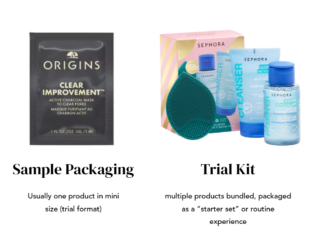
Difference between small sample packaging and larger trial packs
Mini routines & curated product sets
Brands often use trial kits to guide customers through a full experience (e.g., “5-day skin reset”), not just test one product.
Benefits for brands
- Enables cross-selling (multiple SKUs)
- Builds brand experience (not just product)
- Often price-accessible to new customers
3. Why Brands Use Mini or Trial Packaging
More than “just a smaller size”, mini and trial packaging has become a strategic marketing and product development tool for beauty, skincare and personal care brands. Here’s why.
Boosts Trial and Conversion
Letting people try before they commit removes the biggest barrier — risk. According to research, 75% of consumers say they’re more likely to buy from a brand they hadn’t heard of after sampling. Other research finds that nearly half of beauty shoppers also admit that receiving a free sample directly leads to a purchase. In fact, sample or trial users are up to three times more likely to buy the full-size version within 30 days.
Fenty Beauty’s approach with Fenty Snackz is a great example. As Maria Salcedo, Senior VP of Merchandising at Ulta Beauty, explained:
“The price point of minis makes it a lot more accessible, and therefore simplifies the choice where it’s not a trade-off, but it’s more like, ‘I can afford this.’”
By offering mini formats and trial kits, brands make it easier for new customers to say yes. It’s not just sampling — it’s a smart way to turn curiosity into commitment.
Perfect for Influencer PR and Retail Sampling
Mini packaging is lightweight, low cost to ship, and ideal for influencer kits, PR boxes, event giveaways, subscription boxes and retail discovery sets. Brands can scale reach without full size cost.
Fits the “On-the-Go” and Travel Trend
According to the Australian Bureau of Statistics, post-pandemic travel has surged — with overseas trips up 17% and domestic overnight trips up 29%. Weekend getaways, in particular, are booming. Short breaks of one to three nights now account for 68% of all domestic travel in 2024, compared to 59% in 2019.
Tourism spending tells the same story. Domestic tourism expenditure hit $91.2 billion in 2024, a 34% jump from pre-pandemic levels ($68 billion in 2019).
With travel woven into daily life again, consumers are looking for products that fit seamlessly into hand luggage, gym bags, and commuter routines. Travel-size sets are no longer reserved for holidays — they’ve become a staple of everyday convenience.
Enhances Brand Experience
A well-crafted mini or trial set does more than introduce a product — it tells your brand story in miniature. The design, texture, and unboxing experience reflect your brand’s commitment to quality, accessibility, and attention to detail. When customers feel that care from the very first touch, it builds trust and loyalty.
As Stan Rothschild, CEO of Colleen Rothschild Beauty, shared in Modern Retail:
“Mini kits have always been a great strategy to drive product discovery… We hope to gain new customers that appreciate our quality, performance-driven formulas.”
Beautifully designed mini packaging doesn’t just carry a sample — it carries your brand’s promise.
Increases Cross-Selling Opportunities
Trial sets are more than just samples — they’re smart cross-selling tools. By bundling several products like a cleanser, serum, and moisturiser, brands can introduce customers to a complete skincare routine instead of a single item. This helps shoppers experience how the products work together, not just individually.
For brands, that means trial kits don’t just drive first-time purchases, they also grow basket size and strengthen loyalty over time.
Big names like The Ordinary and Drunk Elephant use mini kits strategically for this reason. Their curated “discovery sets” make it easy for customers to explore complementary products, encouraging them to come back for full-size versions of the entire routine.
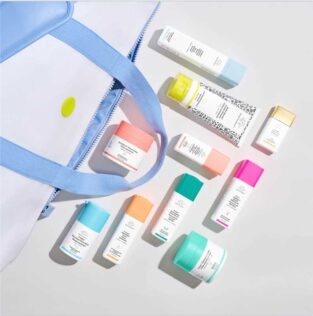
Drunk Elephant travel set featuring branded airless jar, skincare tube, and square airless bottles.
In short, a well-thought-out trial kit turns single product interest into multi-product love, a powerful way to boost cross-sells and long-term value.
Market Testing Before Full Launch
Mini or trial packaging isn’t just a marketing tool, it’s a smart, low-risk way to test the market before a full-scale launch.
Brands use minis to validate everything from formula performance to consumer preference and price positioning. Before committing to a large production run, they can gather real feedback from customers, what they love, what needs tweaking, and whether the product fits their daily routine.
Take The Ordinary, for instance. Before introducing new serums in full sizes, they often release smaller dropper bottles online or through select retail partners to gauge reactions. Similarly, Lush and Glow Recipe use limited-edition minis to trial seasonal products and packaging formats.
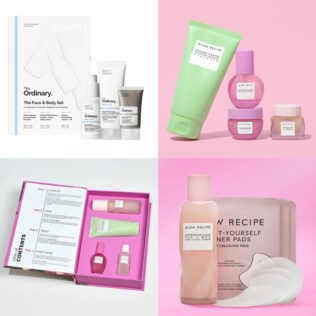
The Ordinary travel packs kit with branded tube and bottle
By testing early, brands can make data-backed decisions, adjusting scent intensity, texture, or packaging ergonomics, before scaling up production. It’s not just safer financially; it helps refine the final experience and ensures the product hits the market with confidence.
Adds Giftability and Retail Appeal
Mini sets and travel kits appeal as impulse buys or gifts. They enhance visibility, fulfilment value, and conversion through bundling.
4. Mini, Sampl,e and Trial Packaging Across Key Industries
Here are the major industry use cases you should highlight for your packaging service:
- Formats: Mini tubes, jars, bottles, sachets
- Common sizes: 5–30 ml
- Materials: Glass jars, PET or PP tubes, laminated sachets
- Custom options: Branded lids, embossed logos, tray inserts for trial kits
- Use: Serums, moisturisers, cleansers, masks, toner
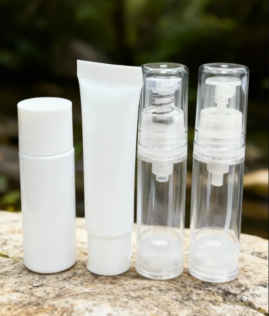
Skincare mini trial kit with toner bottle, 5ml tube, 5ml airless bottle, and spray bottle
Haircare & Personal Care
- Formats: Mini bottles, jars and tubes, travel-size pouches, sachets, cosmetic bags
- Common sizes: 30-50 ml
- Materials: PET/HDPE bottles, glass, laminated pouches
- Custom options: Label wraps, flip-top caps, refillable bottles and pouches
- Use: Shampoos, conditioners, hair oils, body washes, body lotions, lip balm, lip mask
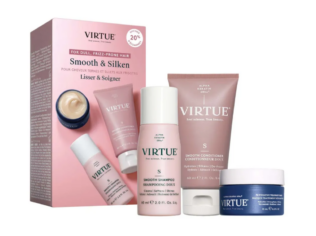
Hair care travel size packs with shampoo bottle, conditioner tube, and hair mask jar
Perfume & Fragrances
- Formats: Mini sprays, vials, rollerballs, sample cards
- Common sizes: 1–10 ml
- Materials: Glass, paper
- Custom options: Branded sample cards, set packaging with inserts, refillable minis
- Use: Discovery sets, travel sprays, PR samples, mini sprays
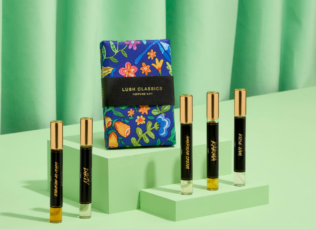
Lush travel-size perfume set with assorted small perfume bottles
5. Common Packaging Challenges
Smaller formats can be deceptively complex. Mini and trial packaging is not just about shrinking a product. Here are key issues to keep in mind when designing mini, sample or trial packaging.
Challenges brands face:
- Material & construction: Not every bottle, pump, or jar scales down easily.
- Label & artwork: Small surfaces can make brand messaging tricky.
- Batching & filling: Mini sizes often require precision equipment.
- Presentation: Even tiny products need to feel premium in kits.
How we help:
At Primepac, we guide brands through these hurdles with a one-stop solution:
- Custom mini/trial kit design: From dielines to physical sample.
- Material advice: Glass, PET, laminates, and eco-friendly options.
- Production expertise: Filling, capping, labelling — all optimised for small sizes.
- Premium presentation: Trays, boxes, or sleeves that enhance unboxing and giftability.
By working with us, brands save time, reduce errors, and ensure mini or trial sets deliver on both brand identity and customer experience — turning small products into big impact.
6. Trends in Mini & Trial Packaging
The global mini packaging market is forecast to grow at a CAGR of ~13.2% from 2025 to 2035, reaching USD 19.245 billion by 2035.
Portable, travel-friendly formats are in high demand—retailers report travel-size selections have more than doubled.
Sustainability is key. According to MENAFN, Brands are shifting toward mono-materials, refillable minis and reducing material complexity.
Minis no longer simply “loss leaders”—they’re part of the core product strategy, designed for discovery, conversion and retention.
7. How to Design Effective Mini, Sample, or Trial Packaging
Here are practical tips for cosmetic, skincare, and personal care brands looking to launch mini or trial packaging.
Maintain Brand Identity
Mini formats should visually echo the full-size product, same shape, cap style, finish to retain brand equity.
Choose Appropriate Materials
For travel sets or trial kits, consider:
- Lightweight plastics (e.g., PET) or glass for premium feel
- Matching closures and dispensing
- Secondary packaging (box, sleeve case, pouch) for presentation
Labeling & Compliance
Even mini formats should include ingredient lists, usage instructions, batch codes and expiry where required.
Create a Cohesive Kit Experience
If bundling multiple minis in a trial kit, consider: tray inserts, magnetic boxes, zip‑pouches. Design the unboxing to feel premium and intuitive.
Align with Customer Journey
Use trial packaging strategically to:
- Adopt as early stage conversion tool
- Offer in influencer/PR kits
- Test new SKUs or scents before full launch
Sustainable Strategy
It’s always nice to show your customers that you actually care about the planet — not just say it. Even the smallest choices, like using eco-friendly packaging or refillable minis, can say a lot about what your brand stands for.
- Offer refill options or recyclable formats
- Use mono materials and minimal decoration
- Communicate eco benefits to consumers
Test & Learn
Track KPIs like: trial to full conversion rate, feedback, and unit economics.
Use data-driven insights to refine format, price, and distribution.
Final thought
Mini, sample, and trial-size packaging aren’t just “extras” anymore — they’re the quiet game-changers in a brand’s growth story. They build trust, spark curiosity, and turn first-time triers into long-term fans.
Think about it — when someone opens a beautifully designed mini set, they’re not just testing a product; they’re experiencing your brand’s personality in the palm of their hand. The feel of the bottle, the ease of the pump, the way it sits in their travel bag — it all adds up to a story about care, detail, and quality.
That’s exactly where we come in. We help brands bring that story to life with a one-stop custom packaging solution — from design to production, tailored to fit every size (literally). Whether you’re launching a trial kit, a travel collection, or a premium sample set, we make the process smoother, faster, and more cost-effective.
Because when your minis look and feel right, they don’t just introduce your brand — they sell it.