
Why Packaging Format Matters More Than Most Heel Balm Brands Think
As winter approaches in Australia, demand for heel care products rises—bringing more brands into a competitive, seasonal market.
Most heel balm brands treat packaging as a final step—something to “wrap” the product once the formula is complete. In reality, the format you choose directly influences how the product is used, how it’s perceived, and ultimately how well it performs in the market.
However, many brands still approach this decision from the wrong angle. Packaging is often selected based on aesthetic trends, competitor imitation, or supplier convenience, rather than what actually drives product success. This leads to important factors being overlooked—such as product viscosity and behaviour, real user habits like where and how the balm is applied, and local compliance or sustainability requirements.
To make a more informed decision, it’s essential to understand how each packaging format performs in real-world use.
Next, we’ll walk through the most common heel balm packaging formats to help you identify which option best fits your product, user experience, and brand positioning.
Tube Packaging — The Most Versatile Choice for Heel Balm

When Tubes Work Best
Tube packaging is ideal for medium-viscosity heel balm formulas, particularly creams that need controlled, hygienic dispensing. It suits daily-use products where convenience matters and performs well in travel-friendly formats thanks to its lightweight and compact design.
Advantages
- Controlled dispensing (reduces product waste)
- Easy and clean application
- Strong branding surface for retail visibility
- Compatible with scalable production
Limitations
- Not suitable for very thick or wax-heavy balms
- Can feel less “premium” compared to rigid formats
Insight: Tubes are the most reliable, low-risk option—making them a strong “safe choice” for brands entering the heel balm market.
Stick Packaging — Built for Convenience and Mess-Free Application

When to Use Stick Formats
Stick packaging is best suited for solid, wax-based heel balm formulations. It works particularly well for products positioned around on-the-go use application, where convenience is a key selling point.
Advantages
- Precise targeting for heels and cracked areas
- Creates a more premium, functional product perception
- Ideal for travel and quick-use scenarios
Limitations
- Mechanism complexity (twist-up or push-up system increases production considerations)
- Higher tooling and development requirements compared to simple formats
Insight: Stick packaging is excellent for differentiation and user experience—but requires careful planning early in the development stage.
Jar Packaging — Simple, Cost-Effective, and Flexible
Best For
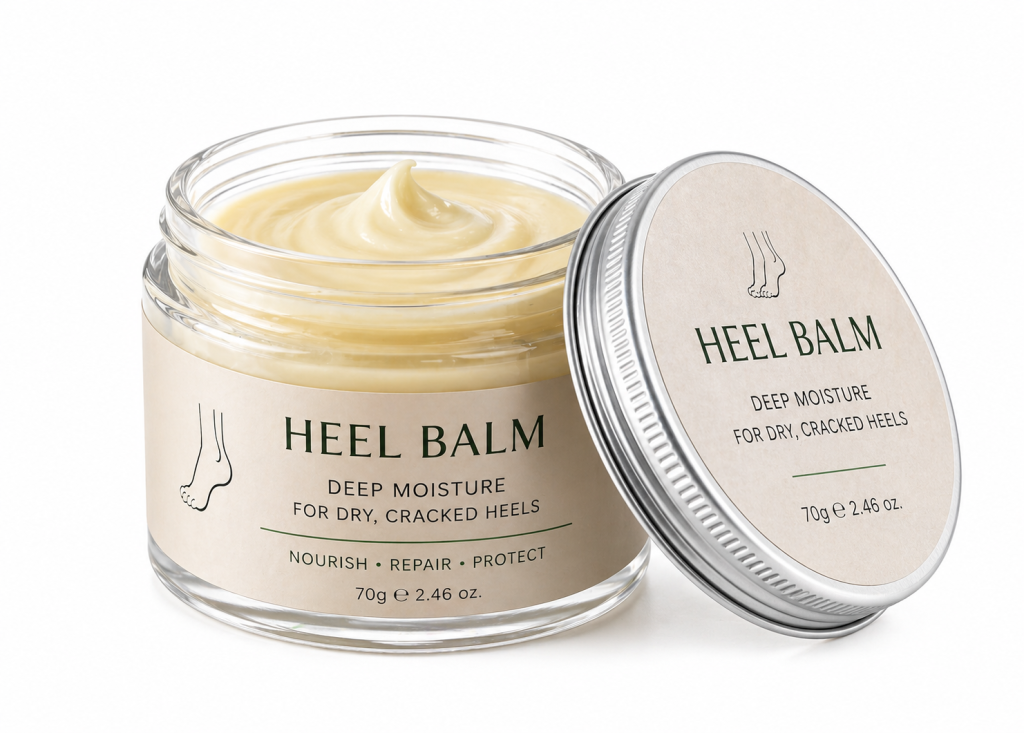
Jar packaging is well suited for thick, rich heel balms that are difficult to dispense through tubes or sticks. It also aligns strongly with natural or organic product positioning, where simplicity and transparency are part of the brand appeal.
Advantages
- Low cost compared to more complex formats
- Easy filling and straightforward manufacturing process
- Compatible with a wide range of formulations
- Flexible sizing options for different product lines
- Strong branding opportunity
Limitations
- Requires finger application, which can feel less hygienic
- Less differentiation in crowded retail environments
Insight: Jar packaging is a practical and cost-efficient choice, especially for startups or brands focusing on simple, bulk, or natural product lines.
Pump Bottle Packaging — Designed for Daily Use and Scalable Skincare Lines
Best For
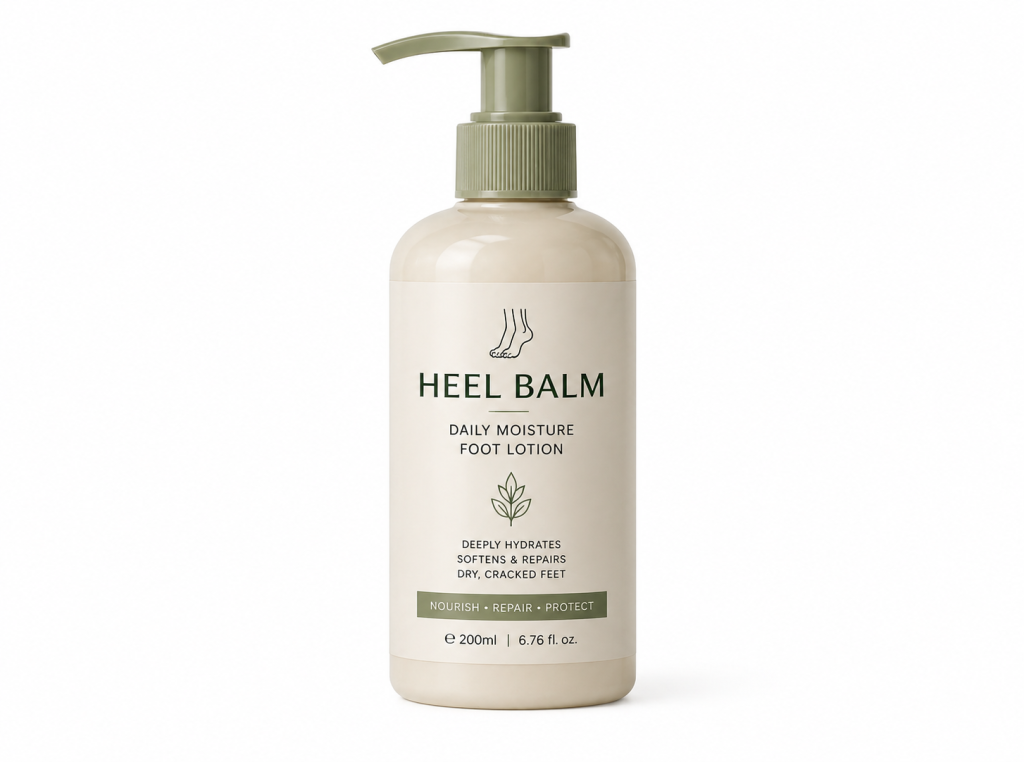
Pump bottles are ideal for lighter heel care products such as lotions, emulsions, or fast-absorbing repair treatments. They are commonly used when the product is positioned for daily use rather than intensive treatment.
Advantages
- Hygienic, no-contact dispensing
- Controlled dosage with each pump
- Familiar format for skincare consumers
- Suitable for larger volumes and routine use
- Strong branding potential (shape, finish, pump style)
Limitations
- More components (pump, dip tube, bottle) increase complexity
- Typically higher cost than tubes or jars
Insight: Pump bottles work best when positioning heel care as part of a daily skincare routine—but they require alignment between formula, usage, and packaging complexity.
Aluminium Tins — Strong Choice for Natural and Eco-Focused Brands
Why Brands Choose Tins
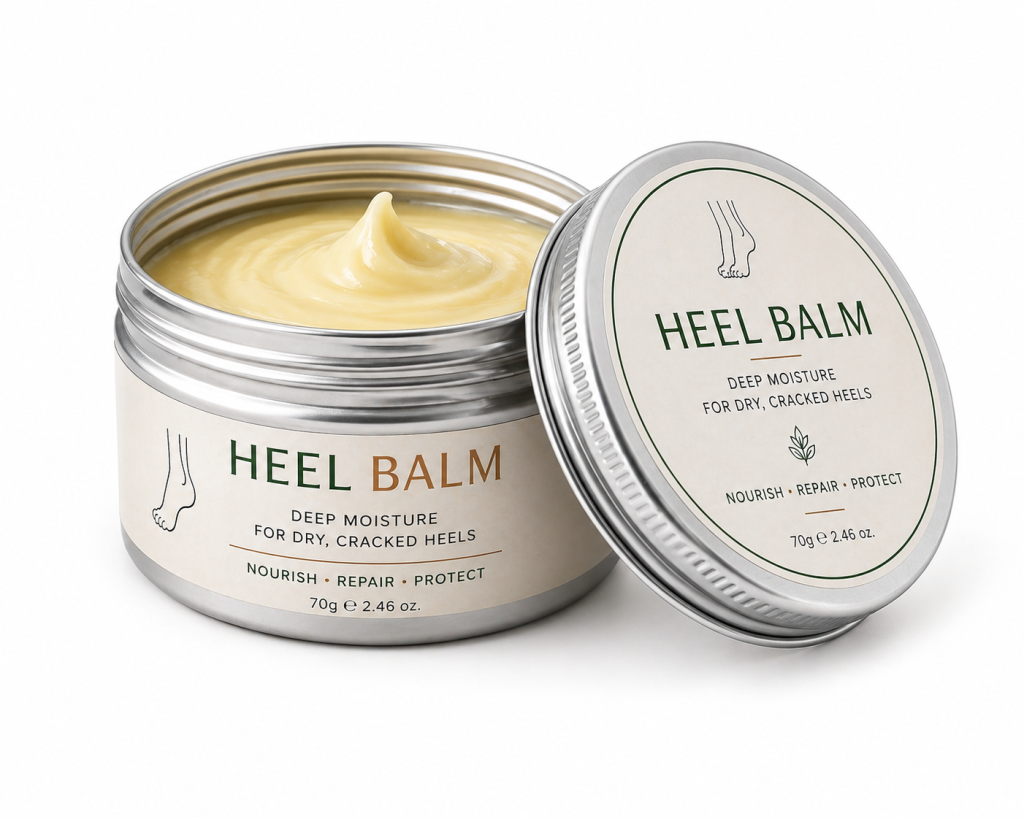
Aluminium tins are commonly selected for their plastic-free positioning and strong appeal as reusable packaging. They fit naturally with brands focused on sustainability, minimalism, and clean ingredient storytelling.
Advantages
- High recyclability
- Durable and suitable for travel
- Reusable, supporting sustainability messaging
- Strong alignment with “clean beauty” and natural branding
Limitations
- Requires finger application, reducing convenience
Insight: Aluminium tins are ideal for sustainability-led branding strategies, but are less suited for mainstream retail formats focused on convenience and scalability.
How to Choose the Right Format Based on Your Product Strategy
Choose Tubes If:
- You want scalability and retail-ready packaging
- Your formula is cream-based or medium viscosity
- You need a balanced option between cost, usability, and branding
Choose Sticks If:
- You want strong differentiation in a crowded market
- Your product is solid or wax-based
- Convenience and hands-free application are key selling points
Choose Jars or Tins If:
- You prioritise cost efficiency or sustainability
- Your formula is thick, rich, or hard to dispense
- You are targeting niche, natural, or eco-conscious markets
Choose Pump Bottles If:
- Your formula is lightweight, lotion-like, or fast-absorbing
- You want to position the product as part of a daily skincare routine
- You need hygienic, controlled dispensing for regular use
Final Decision Framework — Align Product, User, and Packaging
The best packaging format sits at the intersection of three key factors: product formulation, user experience, and brand positioning. Your formula—its viscosity, texture, and ingredients—determines what formats are technically viable. At the same time, how users apply the product, whether hands-free, on-the-go, or as part of a routine, shapes the ideal packaging experience. Finally, your brand positioning—whether premium, natural, or mass-market—guides the visual and functional direction of the format.
There is no single “best” packaging format. The right choice is the one that aligns all three elements into a consistent, practical, and market-ready product strategy.
Build the Right Heel Balm Packaging With Primepac
Choosing the right format isn’t just about the container—it’s about aligning format, structure, materials, and suppliers early to avoid costly changes later.
Primepac works with brands across Australia to simplify this process, from selecting the right packaging format to refining materials, sustainability strategy, and final production. We also support secondary packaging needs, including product boxes, retail-ready packaging with hangers, and labels—ensuring your product is ready for both shelf and scale.
If you’re developing a heel balm product, start with the right packaging strategy before moving into full production.